
AI & Tech Updates: Siri AI, Gemini Voice, Agentic Commerce & More
Estimated reading time: 5 minutesutes

Category: Newsletter
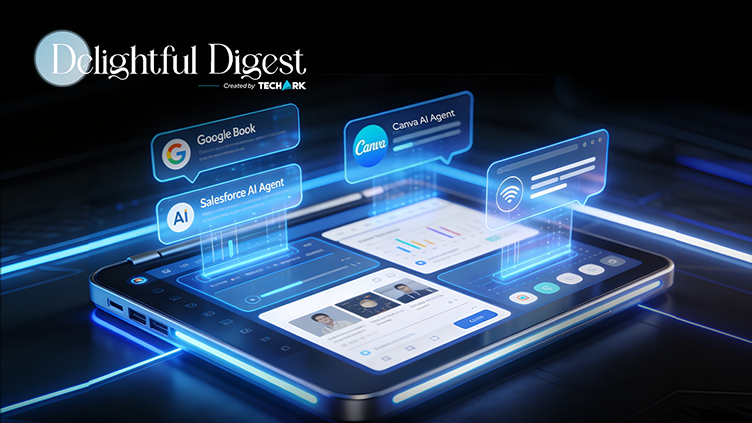
The digital landscape is evolving beyond simple feature updates. Platforms are now introducing AI-driven systems, workflow automation, and infrastructure-level changes that are actively reshaping how businesses build websites, manage operations, create content, and improve digital experiences.
Over the past few weeks, several major companies introduced updates that highlight where digital workflows are heading next — from AI-powered search visibility and autonomous content creation to enterprise AI agents and AI-native productivity systems.
Here are a few recent developments that stood out to us.
Google Updates Spam Policies for AI Search Manipulation Google recently updated its spam policies to target websites attempting to manipulate AI-generated search experiences and AI Overviews. This includes tactics designed specifically to influence AI recommendations rather than traditional search rankings.
For businesses and marketers, this is an important signal that AI search optimization is becoming very different from traditional SEO. As Google continues expanding AI-generated answers inside search, websites will increasingly need to focus on trustworthy, well-structured, and genuinely useful content that AI systems can confidently reference and cite.
Heathrow Deploys Salesforce AI Agent Across Customer Operations Heathrow Airport launched an AI-powered customer operations agent built using Salesforce technologies to help support customer communication and operational workflows at scale.
What makes this implementation interesting is that it moves beyond the typical “chatbot” experience. Instead of only answering questions, AI is now being integrated into real operational systems where it can assist with customer interactions, automate repetitive processes, and improve service efficiency across large organizations.
This reflects a growing shift toward AI becoming part of day-to-day business infrastructure rather than just an add-on tool.
Google AI Overviews Inline Links Are Reshaping SEO Visibility Google’s latest AI Overview updates are changing how websites appear inside search experiences by placing more emphasis on inline AI citations and referenced content sources.
This creates a very different user journey compared to traditional search. Instead of users simply browsing through blue links, AI-generated summaries are increasingly guiding discovery and decision-making directly within search results.
For content teams and businesses, this means content structure, clarity, authority, and extractable information are becoming increasingly important for visibility inside AI-driven search environments.
Canva AI Scheduling Introduces Autonomous Content Workflows Canva introduced AI-powered scheduling and autonomous workflow capabilities that allow teams to automate portions of their recurring content operations.
Rather than only designing graphics manually, teams can now use AI to help generate, organize, schedule, and manage recurring content workflows from within the same platform. This is especially useful for marketing teams managing newsletters, social media campaigns, internal reports, and ongoing content production.
The update highlights how creative platforms are evolving into operational workspaces where AI assists not just with design, but with execution and workflow management as well.
Google Introduces “Googlebook” — A New AI-Native Laptop Category Google announced Googlebook, a new AI-native laptop category powered by Gemini and designed around AI-first productivity experiences.
Unlike traditional laptops where AI exists as a separate application, Googlebook integrates AI directly into the operating system and user experience. Features like contextual assistance, intelligent workflows, and real-time productivity support are designed to work across apps, tasks, and devices seamlessly.
This announcement signals a broader shift toward “AI-native computing,” where operating systems themselves are becoming intelligent assistants that actively participate in how users work, search, create, and collaborate.
As AI, automation, and digital platforms continue evolving, many of the biggest changes are now happening at the workflow and infrastructure level — not just through standalone features.
The organizations that adapt early to these implementation shifts will likely be better positioned to build faster, smarter, and more scalable digital experiences in the future.