The digital landscape continues to evolve as businesses adapt to privacy changes, AI-powered tools, and smarter marketing technologies. Organizations are increasingly investing in platforms that improve data ownership, accelerate development workflows, and automate customer engagement.
In this edition of The Delightful Digest, we highlight several technology trends that are reshaping how companies build digital products, manage data, and optimize marketing strategies.
1. First-Party Data Platforms Help Businesses Replace Third-Party Cookies
As browsers continue phasing out third-party cookies, businesses are shifting toward first-party data strategies. Customer Data Platforms (CDPs) are becoming essential tools for collecting and managing data directly from users.
Key Highlights
- Customer Data Platforms centralize user information CDPs allow businesses to gather first-party data from websites, applications, and CRM systems, creating a centralized environment for managing customer insights.
- Unified profiles improve customer understanding By combining behavioral data, purchase history, and engagement signals, organizations can build detailed customer profiles for better segmentation and targeting.
- Privacy-compliant personalization First-party data enables personalized experiences without relying on third-party tracking, helping businesses remain compliant with evolving privacy regulations.
2. Headless CMS Architecture Enables Faster Website Performance
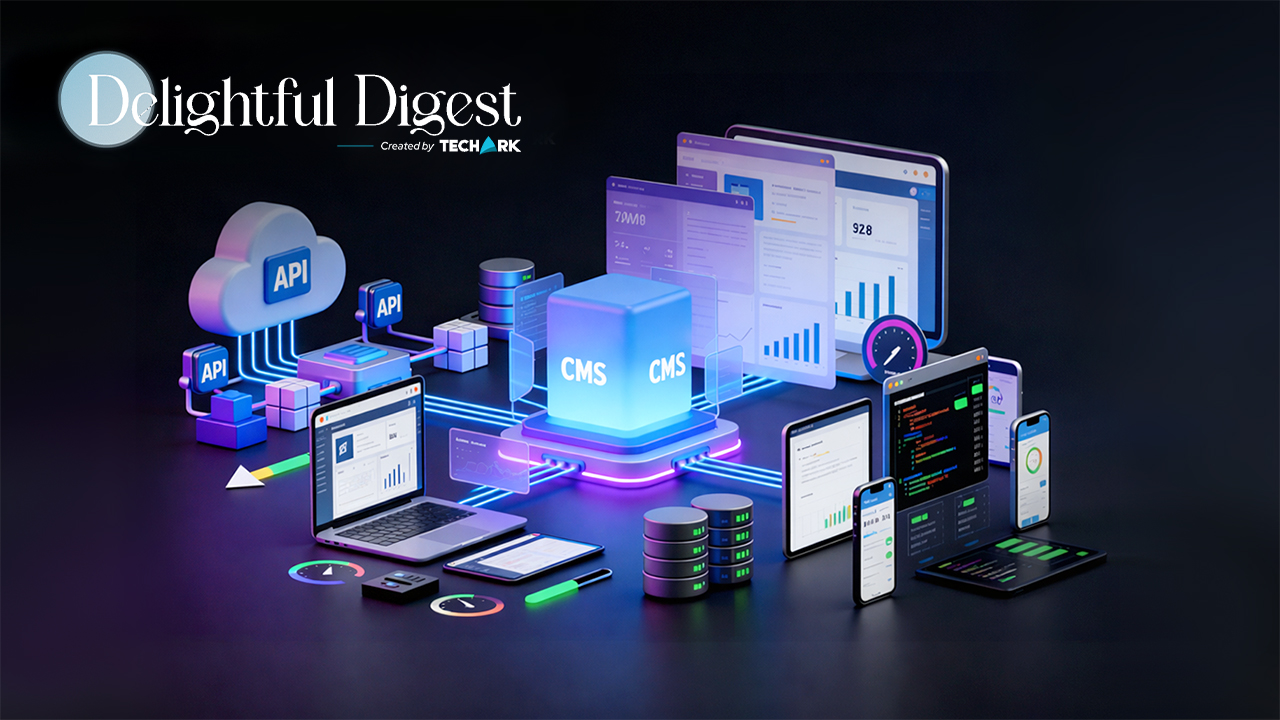
Organizations are increasingly adopting Headless CMS architectures to create more flexible and high-performance digital experiences.
Key Highlights
- Decoupled architecture improves flexibility Headless CMS separates the content management system from the frontend interface, allowing developers to design custom user experiences without CMS limitations.
- Content delivery through APIs Content is delivered via APIs, enabling the same content to power websites, mobile apps, and other digital platforms simultaneously.
- Faster and scalable websites With frontend frameworks optimized independently from the CMS, websites can achieve faster loading speeds and improved performance.
3. Google’s AI Canvas Is Turning Search Into a Development Workspace
Search platforms are evolving into productivity environments. Google’s AI Canvas is introducing capabilities that allow users to create and prototype content directly within search.
Key Highlights
- Generate documents and code directly from search Users can produce structured documents, scripts, or tools without leaving the search interface.
- Rapid prototyping for teams Developers and marketers can quickly experiment with ideas, generate prototypes, and test concepts during the research process.
- Integrated research and creation workflows AI Canvas combines information discovery with content creation, streamlining how teams brainstorm and build new ideas.
4. AI UI Generators Are Turning Wireframes Into Production Code
Artificial intelligence is beginning to transform the interface design process by converting ideas and sketches directly into working UI components.
Key Highlights
- Design concepts generated from prompts or sketches Designers can describe an interface or upload wireframes, and AI tools generate structured UI layouts automatically.
- Development-ready HTML and CSS output Some platforms produce frontend code that developers can immediately integrate into projects.
- Shorter design-to-development cycles AI-assisted UI generation reduces the time required to move from early design concepts to functional applications.
5. Predictive Marketing Analytics Helps Allocate Campaign Budgets Better
Marketing teams are increasingly using predictive analytics to make smarter investment decisions before launching campaigns.
Key Highlights
- Predictive models estimate campaign outcomes Marketing platforms analyze historical campaign data to forecast performance and identify potential results.
- Scenario testing for budget allocation Teams can simulate multiple budget strategies to determine which distribution will likely generate the best return.
- Reduced marketing waste Predictive insights help businesses focus spending on channels and campaigns with higher expected performance.
6. Automated Customer Journey Builders Replace Manual Campaign Management
Marketing automation platforms are evolving into systems that can design and manage entire customer journeys.
Key Highlights
- Automated end-to-end customer journeys Platforms create structured workflows that guide users from initial engagement to conversion and retention.
- Behavior-triggered interactions Campaigns automatically activate based on actions such as page visits, downloads, or purchase behavior.
- Scalable personalization Automation enables businesses to deliver relevant messages to large audiences while maintaining personalized engagement.
Technology is rapidly reshaping how organizations build digital platforms and manage customer engagement. From first-party data strategies to AI-assisted development tools and predictive marketing analytics, businesses are moving toward smarter, automated, and more data-driven ecosystems.
Companies that adopt these innovations early will be better positioned to deliver faster digital experiences, stronger customer relationships, and more effective marketing outcomes.