Contact Us
Send Us a Message
Need expertise and innovation on your project? Our team can help.
Imagine spending months perfecting your keyword strategy, hitting every target phrase, optimizing every meta tag, only to watch your traffic drop anyway.
That’s not bad luck. That’s an outdated strategy meeting a changed reality.
Google no longer just matches keywords to pages. It reads context, understands intent, and increasingly answers users without sending them anywhere. Today, over 58.5% of searches end without a single click, and your perfectly optimized page sits there, unseen.
The game has shifted from ranking for keywords to being recognized as an authority. And those are two very different things.
So what does it actually take to win in 2026? Let’s get into it.
Table of Contents
How Google’s AI Actually Reads Your Website Today
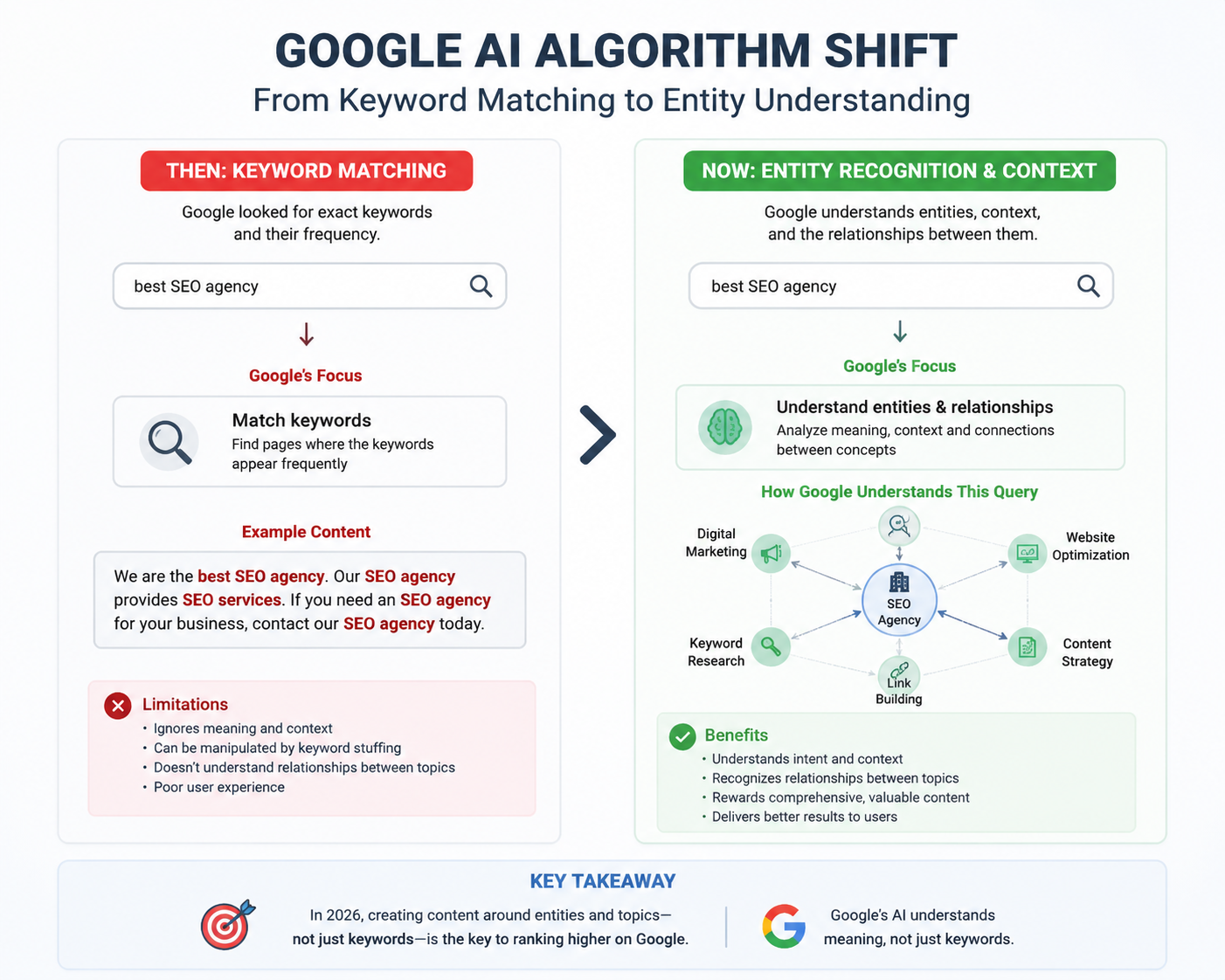
Google’s algorithms have drastically evolved in recent years. It’s no longer just about keyword frequency. Advanced tools like MUM (Multitask Unified Model), AI Overviews, and the Knowledge Graph now focus on understanding the meaning and context behind the words used on a page.
Instead of simply matching keywords, Google’s AI recognizes entities—terms and concepts that are connected to each other. For instance, if your website mentions “TechArk” and “SEO agency” in the same context, Google understands that TechArk is a relevant entity related to SEO and digital marketing. In 2026, Google’s AI doesn’t just read your keywords; it comprehends the relationships between the entities within your content.
Quick fact: Semrush tracked that around 15–25% of all search queries were triggering AI Overviews in 2025, depending on the month and query type
What Is Semantic SEO, and Why Is It Crucial?
Traditional SEO was focused on matching keywords with search queries. Semantic SEO, on the other hand, helps search engines understand the meaning, context, and relationships between words, making your content more aligned with real user intent.
At its core, semantic SEO is about building a rich content ecosystem that connects topics, concepts, and entities. This mirrors how users naturally think and search. For example, a page targeting “electric cars” should naturally include related topics like battery range, charging infrastructure, environmental impact, and total cost of ownership. These related concepts help Google understand that the page is not just about a single keyword but the full topic.
With semantic SEO, Google prioritizes:
- Topic intent, not just keyword density
- Entity understanding that links concepts
- Displaying your page as a meaningful answer in AI Overviews and featured snippets
As Google’s AI shifts towards understanding content in context, embracing semantic SEO helps ensure that your content is comprehensive, relevant, and capable of ranking for a broader range of related queries.
Comparison: Traditional SEO vs. Semantic SEO
| Aspect | Traditional SEO | Semantic SEO |
| Focus | Keyword frequency and exact match | Context, meaning, and relationships between words |
| Keyword Strategy | Focuses on individual keywords | Focuses on keyword variations and related concepts |
| Content Structure | Single-topic, keyword-stuffed content | In-depth, well-rounded content covering topics and related entities |
| Search Intent | Matches keywords to search queries | Matches content to user intent and context |
| Search Engine Understanding | Limited understanding of content context | Enhanced understanding of topics and relationships |
| Optimization Approach | Primarily on-page keyword optimization | Optimizing for semantic relevance and AI algorithms |
| Ranking Signals | Keyword density, backlinks, on-page optimization | Topical authority, semantic relevance, and E-E-A-T signals |
How Does Topical Authority Impact Your Website’s Rankings?
Google’s AI now evaluates a website’s depth and breadth of content on specific subjects to determine its authority. Websites that cover a topic comprehensively are seen as more authoritative than those that focus on just one narrow aspect.
For example, a site with 20 detailed blog posts about SEO will rank higher than a website with 200 scattered posts on unrelated topics. Google values topical authority — the depth of coverage on a specific subject — over simply targeting individual keywords.
Why Is the Pillar-Cluster Model Essential for SEO Success?
The pillar-cluster model has become a key content strategy to help search engines understand your website’s depth, breadth, and context. Instead of focusing on isolated keyword‑specific pages, this strategy organizes content around pillar pages and cluster pages.
Pillar Pages
A pillar page is a comprehensive, long-form guide that covers a broad topic in depth. It serves as the central hub for all related subtopics (cluster content).
Cluster Pages
Cluster pages dive deeper into specific subtopics related to the pillar page. These are more detailed, niche articles that link back to the pillar page.
By structuring your content in this way:
- Pillar pages build authority around broad topics
- Cluster pages support the pillar with focused insights
This approach signals to Google that your website is an authoritative resource on a given subject. The strategic internal linking between pillar and cluster pages ensures that relevance and authority are distributed across the entire site.
What Are E-E-A-T Signals, and How Do They Affect SEO Rankings?
E-E-A-T, which stands for Experience, Expertise, Authoritativeness, and Trustworthiness, has become an essential component for SEO success in 2026. Google’s AI uses trust signals like author bios with credentials, original research, external citations, and structured data to evaluate content quality.
Key Features of E-E-A-T Content:
- Author Information: Detailed bios with credentials and professional experience
- Expertise: Content written by professionals or subject matter experts
- Original Research: Includes original data, studies, or case studies
- Citations: Links to trusted, authoritative websites or research papers
- Structured Data: Use of schema to provide additional context to Google’s AI
- User Experience: Well-organized, easy-to-read content that answers the user’s query
Websites that excel at E-E-A-T are more likely to rank well, as they signal credibility and trustworthiness to both Google and users.
How Can Understanding Search Intent Improve Your Content Strategy?
In 2026, optimizing for search intent is more important than ever. With Google’s increasing focus on user experience, search engines now prioritize content that matches the specific needs and goals behind a user’s query. It’s no longer enough to target just keywords; the context and purpose of the search play a crucial role in determining which content ranks. By understanding the different types of search intent and aligning your content accordingly, you ensure that your website addresses user queries effectively, improving both your rankings and user engagement.
Let’s explore the four main types of search intent and how they influence content strategy.
- Informational: Queries where users are looking for information (e.g., blog posts, guides, FAQs).
- Navigational: Queries where users are looking for a specific website or page (e.g., company contact page).
- Commercial: Queries where users are comparing products or services (e.g., product/service comparison pages).
- Transactional: Queries where users intend to make a purchase (e.g., product checkout pages).
Understanding and optimizing for search intent ensures your content matches users’ needs at every stage of their journey.
Quick fact: Analysis shows that over half (51%) of Google searches are informational, followed by navigational (33%) and commercial (14.5%) intents — with truly transactional searches making up less than 1% of queries
A 10-Step Roadmap to Building a Content Ecosystem for Sustainable SEO Success
Here’s how to create an SEO strategy that transcends traditional keyword focus:
1. Conduct a Content Audit — Align Content with Search Intent
Evaluate your existing content to ensure it aligns with modern SEO standards. Identify outdated, underperforming, and high-performing content.
2. Group Keywords by Search Intent — Understand User Needs
Organize your keywords into categories based on search intent: navigational, informational, commercial, or transactional.
3. Build Pillar Pages — Establish Content Foundations
Create pillar pages that serve as comprehensive guides on your core topics, linking back to more specific subtopics.
4. Create Cluster Content — Expand on Subtopics
Develop supporting content that links back to pillar pages, providing more detailed insights into each topic.
5. Optimize for Entities and Semantics — Enhance Content Relevance
Implement semantic SEO and ensure your content is rich with entity relationships.
6. Implement Schema Markup — Help AI Understand Your Content
Use schema markup to improve visibility in AI-driven search results and increase your chances of appearing in featured snippets.
7. Monitor and Refine Topical Authority — Keep Your Content Updated
Regularly track your content’s performance and update it to stay relevant and authoritative.
8. Diversify Your Content Formats — Reach Broader Audiences
Repurpose content into videos, podcasts, and infographics to engage more users and increase reach.
9. Automate and Distribute — Optimize Content Reach
Leverage automation tools for content distribution to maintain visibility across various platforms.
10. Measure and Iterate — Track Success and Adapt
Measure KPIs like traffic, engagement, and conversion rates to continuously refine your strategy.
How TechArk Helps Clients Achieve Strong AI Overview Results Across Industries
At TechArk, we understand the evolving landscape of SEO in 2026 and how modern SEO strategies can significantly impact search visibility. Our expertise spans various industries, helping businesses reach new heights in AI-driven search results.
For instance, we recently worked with a healthcare industry client and implemented semantic SEO strategies like topical authority and E-E-A-T signals. By aligning content with user intent and optimizing for entities rather than just keywords, we enhanced our client’s visibility and authority in AI Overviews.
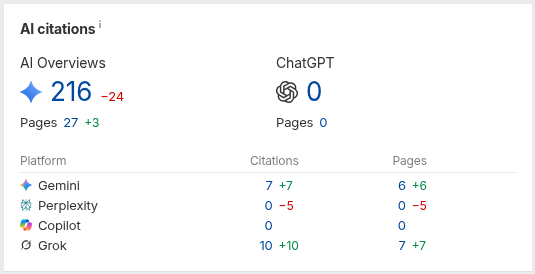
Here are the results achieved in just 6 months:
- Monthly Data: 221 citations in AI Overview results
- AI Overview Citations:
- Gemini: 7 Citations
- Grok: 10 Citations
- Brand and related content appear in AI Overview results for 220+ organic queries.
- Starting point: Zero citations, now ranked in top queries
This transformation is a prime example of how leveraging modern SEO techniques can lead to improved rankings, greater search visibility, and sustained organic growth. Whether you’re in healthcare, finance, retail, or any other industry, TechArk’s tailored SEO strategies help businesses thrive in today’s competitive digital environment.
Key Takeaways
- SEO Evolution: Keyword-based SEO is outdated. Google now focuses on semantic SEO, topical authority, and AI content understanding.
- AI Over Keywords: Google’s AI understands entities and their relationships, not just keyword frequency.
- Topical Authority Wins: Sites with comprehensive coverage on a subject rank higher than keyword-stuffed ones.
- Pillar-Cluster Model: Organize content into pillar pages (broad topics) and cluster pages (specific subtopics) for better rankings.
- E-E-A-T Signals Matter: Experience, Expertise, Authoritativeness, and Trustworthiness are key ranking factors in 2026.
- Search Intent Optimization: Align your content with user intent for better visibility and ranking.
Bottom Line
In 2026, SEO is no longer about relying solely on keywords. It’s about embracing a comprehensive strategy that incorporates semantic SEO, topical authority, search intent, and E-E-A-T. By incorporating these elements into your SEO strategy, your website will thrive in today’s AI-driven search environment.
FAQs
1. What is semantic SEO and how does it differ from keyword SEO?
Semantic SEO focuses on the meaning behind the words rather than just keyword frequency. It’s about understanding context, entities, and how terms relate to each other. In contrast, keyword SEO relies primarily on the number of times a specific keyword appears in content.
2. What is a pillar page and why does it matter for rankings?
A pillar page is a comprehensive guide on a broad topic, acting as a central hub for related subtopics. It links to more detailed cluster pages that delve deeper into specific areas of the topic. This structure helps build topical authority, improving your site’s rankings by showing Google that your content is well-organized and covers a subject comprehensively.
3. How do I build topical authority for a new website?
Building topical authority involves creating in-depth, comprehensive content on specific topics and linking them together strategically. Start by developing a pillar page with related cluster pages that link back to the pillar and each other. Over time, consistently adding valuable content to this ecosystem will boost your site’s authority in the eyes of Google.
4. How does E-E-A-T affect my website’s Google ranking in 2026?
E-E-A-T (Experience, Expertise, Authoritativeness, and Trustworthiness) is critical for ranking in 2026. Google rewards websites that demonstrate these qualities through well-researched content, credible author bios, external citations, and structured data. Sites with high E-E-A-T signals are more likely to rank higher because they are seen as trustworthy and credible sources of information.
5. What is entity-based SEO?
Entity-based SEO focuses on the recognition of entities (e.g., people, places, things) and their relationships within content. Google’s AI understands entities and their context to deliver more accurate and relevant search results. For instance, content that mentions “TechArk” as an entity related to “SEO services” helps Google understand its relevance in the SEO industry.
6. Can small businesses use a content cluster strategy effectively?
Absolutely! Small businesses can benefit greatly from the pillar-cluster model, especially by focusing on specific niche topics. By organizing content into pillar pages (broad topics) and cluster pages (specific subtopics), small businesses can establish authority in their industry and improve rankings without needing extensive resources.
Ready to Future-Proof Your SEO Strategy?
Are you ready to take your SEO strategy to the next level? It’s time to move beyond the traditional keyword approach and embrace a more holistic, AI-driven SEO strategy. At TechArk, we specialize in building topical authority, semantic SEO, and E-E-A-T strategies that ensure your content ranks higher, drives more traffic, and converts better.
Contact us today to learn how we can help you build a content ecosystem that works seamlessly with Google’s evolving algorithms and improves your online visibility!