
Contact Us
Send Us a Message
Need expertise and innovation on your project? Our team can help.
AI in Programmatic Advertising: Automation, Personalization, and Predictive Power
Programmatic advertising has transformed the digital advertising landscape, making it more efficient, targeted, and data-driven. The integration of artificial intelligence (AI) has taken this transformation to the next level, offering businesses the ability to automate campaigns, optimize ad placements in real-time, and deliver personalized ads to users. With its predictive analytics, automation, and real-time adjustments, AI is reshaping the future of programmatic advertising, helping brands stay ahead in the competitive digital market.
This article will explore the key ways AI is shaping the future of programmatic advertising, revolutionizing how advertisers connect with consumers.
How AI is Revolutionizing Programmatic Advertising
The rise of artificial intelligence (AI) has revolutionized programmatic advertising, transforming how brands interact with consumers. By harnessing the power of AI, advertisers can automate bidding, deliver personalized ads, and optimize campaigns in real-time. This shift not only improves efficiency but also ensures highly targeted, data-driven advertising that enhances user engagement. As AI continues to evolve, its influence on programmatic advertising will only grow, offering even more opportunities for brands to connect with their audience effectively and efficiently.
1. AI-Powered Bidding and Real-Time Campaign Management
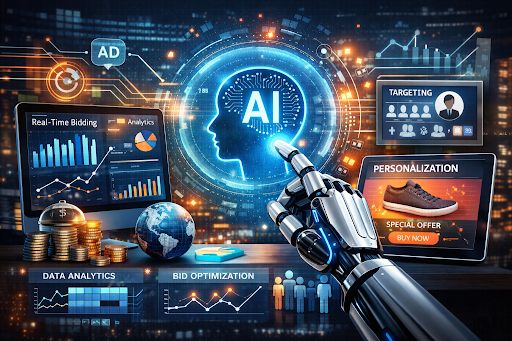
Programmatic advertising is all about automation, but with AI, it reaches a whole new level. AI algorithms analyze enormous amounts of data in real time to determine the best bidding strategies, optimizing the ad buying process. The shift from traditional manual bidding methods to AI-powered bidding allows for smarter, faster decisions.
Key benefits include:
- Real-Time Bidding (RTB): AI evaluates factors like user behavior, time of day, and location to automatically adjust bids in real time, ensuring the best price for ad placements.
- Increased Efficiency: AI removes the need for human intervention by automating bidding, targeting, and performance optimization.
- Better Budget Allocation: With AI managing bidding in real-time, advertisers can ensure they allocate budgets effectively to maximize ROI.
Pro Tip: Integrating AI into your programmatic advertising strategy can reduce inefficiencies and improve performance across multiple channels. Ensure your data pipeline is well-organized to maximize the impact of AI-powered tools.
2. Enhanced Targeting and Personalization
AI brings a high level of personalization to programmatic advertising. With machine learning algorithms, AI can predict consumer behavior based on historical data, enabling advertisers to serve highly relevant ads to specific audience segments.
AI enables deep audience segmentation by:
- Analyzing browsing behavior and past purchases: AI systems track users’ online activities to predict what kind of products or services they are likely to be interested in.
- Tailoring content: AI can personalize ads by serving them at the most opportune times, increasing the likelihood of engagement.
- Dynamic Creative Optimization (DCO): AI can automatically adjust creative elements (like text, images, and call-to-action buttons) to suit the individual preferences of the user.
By leveraging AI for personalized advertising, companies see improved engagement and higher conversion rates.
3. Predictive Analytics: Preparing for Future Trends
One of AI’s most compelling capabilities in programmatic advertising is predictive analytics. Through the analysis of historical data and trends, AI can forecast future consumer behavior and ad performance. This allows marketers to adjust their campaigns proactively, ensuring that they are always ahead of the curve.
Advantages of predictive analytics include:
- Forecasting ad performance: AI can predict which ads are likely to perform best, allowing marketers to focus their efforts on high-performing creative.
- Identifying trends: By identifying emerging trends in consumer behavior, AI helps marketers capitalize on new opportunities early.
- Proactive campaign adjustments: Rather than reacting to poor performance, AI allows advertisers to adjust their strategies before underperformance occurs.
Quick facts: According to a Forrester report, 63% of marketers say predictive analytics significantly improve their ability to target the right audience, resulting in higher campaign success rates.
4. AI and Real-Time Data Processing
The ability to process data in real time is one of AI’s greatest advantages in programmatic advertising. Unlike traditional methods, which require manual analysis and adjustments, AI can continuously analyze and optimize campaigns based on real-time performance data.
Key elements of AI’s real-time capabilities include:
- Instant feedback: AI systems monitor campaign performance 24/7 and make adjustments to targeting, bidding, and creative elements in real time.
- Improved ad placement: By constantly analyzing user behavior, AI ensures that ads are placed where they will be most effective at the most opportune times.
- Instant cost optimization: AI adjusts bids and targeting parameters to ensure that advertisers are getting the best value for their ad spend.
The ability to adjust in real time enables advertisers to maximize their budgets and improve campaign performance across various channels.
5. Enhanced Data Privacy and Security
As the reliance on AI in programmatic advertising grows, so does the need for data security and privacy. AI platforms are built with compliance and privacy in mind, ensuring that advertisers can still benefit from data-driven targeting without compromising user privacy.
AI helps maintain data privacy by:
- Anonymizing data: AI systems anonymize sensitive data, protecting users’ identities while still enabling effective ad targeting.
- Ensuring compliance with regulations: AI platforms are designed to comply with global data privacy laws such as GDPR and CCPA, helping advertisers avoid legal pitfalls.
- Protecting consumer consent: AI systems help manage user consent preferences, ensuring that advertising practices remain transparent and user-friendly.
With privacy concerns continuing to grow, AI ensures that advertisers can use data responsibly while maintaining the integrity of their campaigns.
Comparison Table: AI in Programmatic vs Traditional Advertising
| Bidding | Real-time automatic bidding optimization | Manual bidding adjustments |
|---|---|---|
| Targeting | Data-driven, highly personalized | Broad targeting based on demographics |
| Efficiency | Automated, reduces human error and labor | Manual processes with slower results |
| Data Processing | Continuous real-time processing and optimization | Post-campaign analysis with delayed decisions |
| Personalization | Dynamic ad personalization based on behavior | Limited personalization |
Key Takeaways
- Automation: AI automates bidding, targeting, and optimization, making programmatic advertising more efficient and cost-effective.
- Personalization: AI delivers highly personalized ads, improving user engagement and conversion rates.
- Real-Time Optimization: AI continuously analyzes and optimizes campaigns in real time, ensuring better performance.
- Predictive Analytics: AI anticipates consumer behavior, allowing advertisers to proactively adjust their strategies.
- Data Privacy: AI helps advertisers stay compliant with data privacy regulations while still delivering effective targeting.
Last Thoughts
Artificial intelligence is set to play an increasingly important role in the future of programmatic advertising. With its ability to automate processes, deliver personalized experiences, and optimize campaigns in real time, AI is reshaping the way advertisers engage with their audiences. At TechArk, we continuously harness the power of AI to craft smarter, more efficient digital marketing strategies. The integration of AI in programmatic advertising offers immense potential, driving better results and creating more meaningful connections between brands and consumers.
FAQs
1. How does AI enhance targeting in programmatic advertising?
AI enhances targeting by analyzing large datasets, identifying patterns, and delivering highly personalized ads to specific audience segments based on their behavior, preferences, and demographics.
2. What is real-time bidding in AI-driven programmatic advertising?
Real-time bidding (RTB) in AI-driven programmatic advertising is when AI continuously evaluates user behavior and adjusts bids automatically, ensuring the best price for ad placements and maximizing ROI.
3. How does AI predict consumer behavior for advertising?
AI uses historical data and machine learning models to identify patterns in consumer behavior. These insights help marketers predict what users are likely to do next, allowing them to serve ads at the most opportune times.
4. Is AI in programmatic advertising secure?
Yes, AI platforms are designed with data privacy and security in mind, ensuring compliance with privacy regulations such as GDPR and CCPA, while still enabling effective ad targeting.
Ready to take your advertising strategy to the next level? Embrace the power of AI in programmatic advertising with TechArk. Reach out to us today to learn how AI can optimize your ad campaigns, increase ROI, and deliver more personalized experiences to your audience.